
AI VOICE APPOINTMENT ASSISTANT
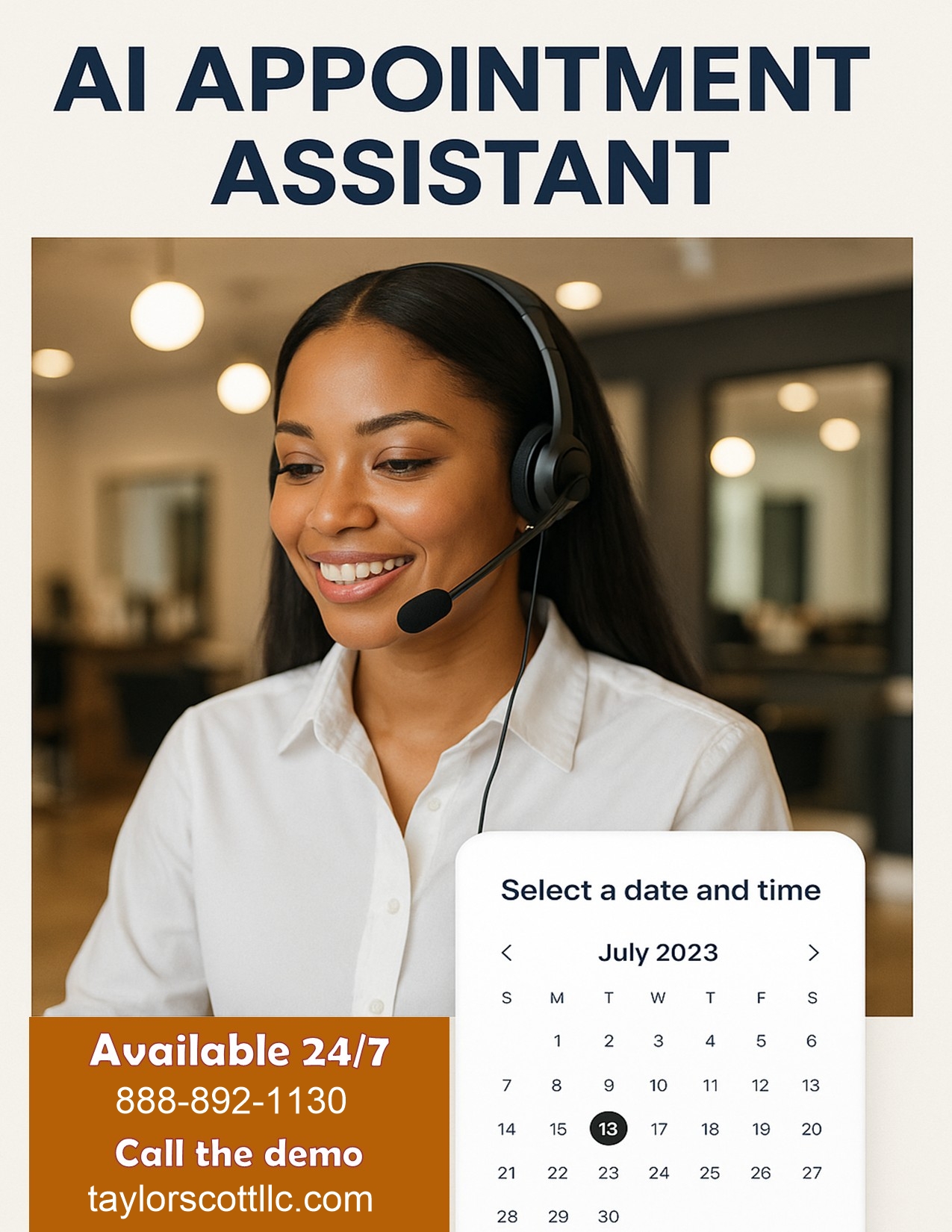
What Are AI Voice Assistants and How Do They Work?
AI voice assistants are smart, hands‑free tools that allow you to speak naturally and receive instant spoken responses. You’ve likely used one already—whether through your smartphone, a smart speaker, or a connected device in your home. With simple voice commands, you can set reminders, check the weather, play music, control your lights, and complete everyday tasks without lifting a finger.
How AI Voice Assistants Understand You
Behind the scenes, voice assistants use advanced speech recognition and natural language processing to listen to what you say, interpret your meaning, and respond accurately. Popular examples include Siri, Amazon Alexa, and Google Assistant. Over time, these systems “learn” your voice, preferences, and common requests, becoming more personalized and efficient with every interaction.
Privacy and Security Considerations
Because voice assistants are always ready to respond, privacy and data security remain important topics. Technology companies continue to improve how user information is protected, but many people still consider privacy when deciding how and when to use voice‑enabled devices.
Accessibility Benefits
AI voice assistants offer tremendous value for individuals with mobility or vision challenges. Instead of typing, tapping, or navigating screens, users can simply speak to get things done. This hands‑free convenience makes technology more accessible and inclusive.
Limitations to Be Aware Of
While powerful, voice assistants aren’t perfect. They may struggle with background noise, strong accents, or complex questions. Even so, they continue to improve rapidly as voice‑AI technology evolves.
Conversational AI VOICE ASSISTANT
What Is Conversational AI and How Does It Work?
Conversational AI is a broad category of technology designed to communicate with people in a natural, human‑like way. Unlike basic voice assistants that follow simple commands—such as “Set a timer” or “Call Mom”—conversational AI can engage in longer, more meaningful back‑and‑forth discussions. It understands context, remembers previous messages, and adapts its responses to fit the flow of the conversation.
More Than Just Voice Commands
Tools like website chatbots, virtual customer service agents, and advanced systems such as ChatGPT are all examples of conversational AI. These tools can answer detailed questions, explain complex topics, and maintain continuity throughout the conversation. This makes interactions feel more intuitive and personalized.
How Businesses Use Conversational AI
Companies across industries rely on conversational AI to:
Answer customer questions instantly
Book appointments or schedule services
Recommend products or solutions
Provide 24/7 automated support
Reduce response times and improve customer satisfaction
By automating routine interactions, businesses save time, streamline operations, and deliver a smoother customer experience.
Why Responsible Use Matters
As conversational AI becomes more advanced, accuracy, fairness, and responsible implementation are essential. Ensuring that these systems provide reliable information and treat all users fairly helps build trust and supports long‑term success.
(313) 414-1056
211 S Marshall St., Pontiac, MI 48342